

FAULT MANAGED POWER (Class 4 Power)
High Power Electricity over Low-Voltage Cabling
Fault Managed Power (FMP) redefines how we think about electrical and data distribution.
Sinclair® Digital's Leadership
Sinclair® Digital’s Fault Managed Power (FMP) solution is our engineered implementation of safe, high-power DC distribution for industrial and commercial facilities. Built in-house and manufactured at scale, FMP is a core component of the AGILE-CORE® platform — designed for reliable, real-world deployment from day one.
With well over one million square feet of Fault Managed Power deployed, Sinclair® Digital is a recognized leader in Class 4/Fault Managed Power systems. From IT/OT networks, lighting, and access control to security, our FMP solutions power a broad range of critical building systems.
The future of building infrastructure runs on safe DC power and unlimited bandwidth.
Sinclair® Digital incorporates Class 4 Fault Managed Power transmission technology, including Digital Electricity®, to deliver safe, scalable DC power distribution.
Explore AGILE-CORE® Distributed Edge Architecture and see what your network could look like.
What is Fault Managed Power
(Class 4 Power)
As buildings go from analog to digital and endpoints need more power and data, adopting Fault Managed Power (FMP) is no longer optional—it’s essential. FMP delivers the power and reach of higher voltage systems but without the expensive conduit, copper and specialized labor. It’s the game changer for electrical distribution and IT/OT networks.
Sounds like magic power – it’s not. Its Fault Managed Power.

High Power
1500W per copper pair

Long Distance
Over 1km

Fast Installation
Limited energy means less materials and reduced labor requirements
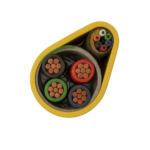
Power + Data
Hybrid cables have both fiber and copper conductors under the same cable to deliver data and power to the very edge of your network.

Safety
UL-1400-1 Compliant
Sinclair® Digital's Fault Managed Power System (Class 4 Power)
Fault Managed Power (FMP) — also known as Class 4 Power or Fault Managed Power Systems (FMPS) — is an emerging electrical distribution technology that makes power delivery safer, more reliable, and more efficient than traditional power systems. Added to the 2023 National Electric Code, it is gaining industry recognition.
Unlike conventional power distribution that relies on protective devices like breakers and fuses to respond after a fault occurs, FMP systems actively monitor for faults and stop energy delivery instantly to avoid hazards and downtime.

Watch this educational session, which provides a clear, concise overview of Class 4 Fault Managed Power Systems—an approach reshaping how power and data are delivered across modern buildings and digital infrastructure.
FAQ
A power transmitter takes standard AC or DC power from the grid, UPS, or panel and transforms it into a digital stream of discrete energy packets that carry both power and system information.
The transmitter continuously checks the power path for abnormal conditions (like a short circuit, water ingress, or someone touching a cable).
If a fault is detected, the system cuts off energy in milliseconds, limiting the fault energy — the amount of power that could potentially cause harm.
Instead of sending a continuous electrical signal, the transmitter sends hundreds of tiny energy packets per second over FMP‑rated cabling. Each packet contains just a small amount of energy — enough to be useful, but not enough to cause harm if a fault occurs.
It enables safe power transmission even at higher voltages and over longer distances than traditional low‑voltage systems.
At every moment, the system monitors the energy flow for abnormal conditions — such as a short circuit, ground fault, overload, or physical contact with a conductor. If a fault is detected, the system immediately stops sending further energy packets, halting power transmission within milliseconds and limiting the energy delivered into the fault.
Because each packet contains only a small amount of energy, the risk of shock or fire is inherently minimized — much like traditional low‑power systems — even though the overall delivered power can be high.
At the destination, a power receiver reassembles the incoming energy packets and converts them back into the required DC voltage or AC output for end devices. This enables conventional loads — such as lighting, wireless access points, sensors, servers, or other distributed equipment — to be powered safely and efficiently.
Class 4 power can often be installed using the same pathways and practices used for communication cabling — the same integrators who do PoE and structured cabling can support FMP systems — helping projects deploy faster and more predictably.
Class 4 power can often be installed using the same pathways and practices used for communication cabling — the same integrators who do PoE and structured cabling can support FMP systems — helping projects deploy faster and more predictably.
FMP technology is now defined in the NEC (Class 4) and supported by new safety standards (e.g., UL 1400), reflecting growing industry adoption and ensuring system reliability and compliance.
Yes. Sinclair Digital offers multiple FMP receiver configurations designed to support a wide range of applications and load requirements.
Receiver configurations can be tailored for different output power levels, voltage requirements, enclosure ratings, mounting styles, and environmental conditions (indoor, outdoor, industrial, etc.).
Yes. Custom receiver configurations are available to meet unique performance, compliance, or environmental needs. Data Centers, fulfillment centers, small cell, EV charging and more have different requirements.
Contact your Sinclair Digital sales representative to review your application requirements and receive guidance on the appropriate receiver solution.
Where Fault Managed Power Is Making an Impact
FMP is ideal for modern digital infrastructure where power resilience and scalability are critical:

Data Centers & Edge Facilities
Reducing downtime risk and simplifying distribution trays ensuring continuous uptime for mission-critical workloads.
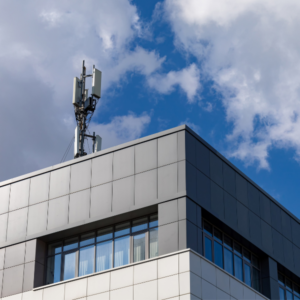
Telecommunications & Wireless Networks
Powering remote nodes without complex AC distribution.

Healthcare & Critical Facilities
Protecting people, devices, and equipment with reliable fault isolation and from power anomalies.

Commercial Buildings
Reliable power for smart systems and emergency operations to keep your facility running safely and efficiently.

Education & Campus
Scalable for edge computing to support high performance learning where uptime is critical.

Hospitality
Maintains smooth operations, ensuring guest comfort, uninterrupted services, and a seamless guest experience.
Sinclair Digital is a proud member of the FMP Alliance, an industry‐leading association dedicated to advancing Fault Managed Power (FMP) technology and promoting its widespread adoption across enterprise, commercial, and industrial applications.
Learn More & Get Started?
Ready to explore how Fault Managed Power / Class 4 Power can empower your next project?
Contact us to discover design considerations, deployment strategies, and real‑world use cases.
Digital Electricity® is a registered trademark of VoltServer, Inc.
